
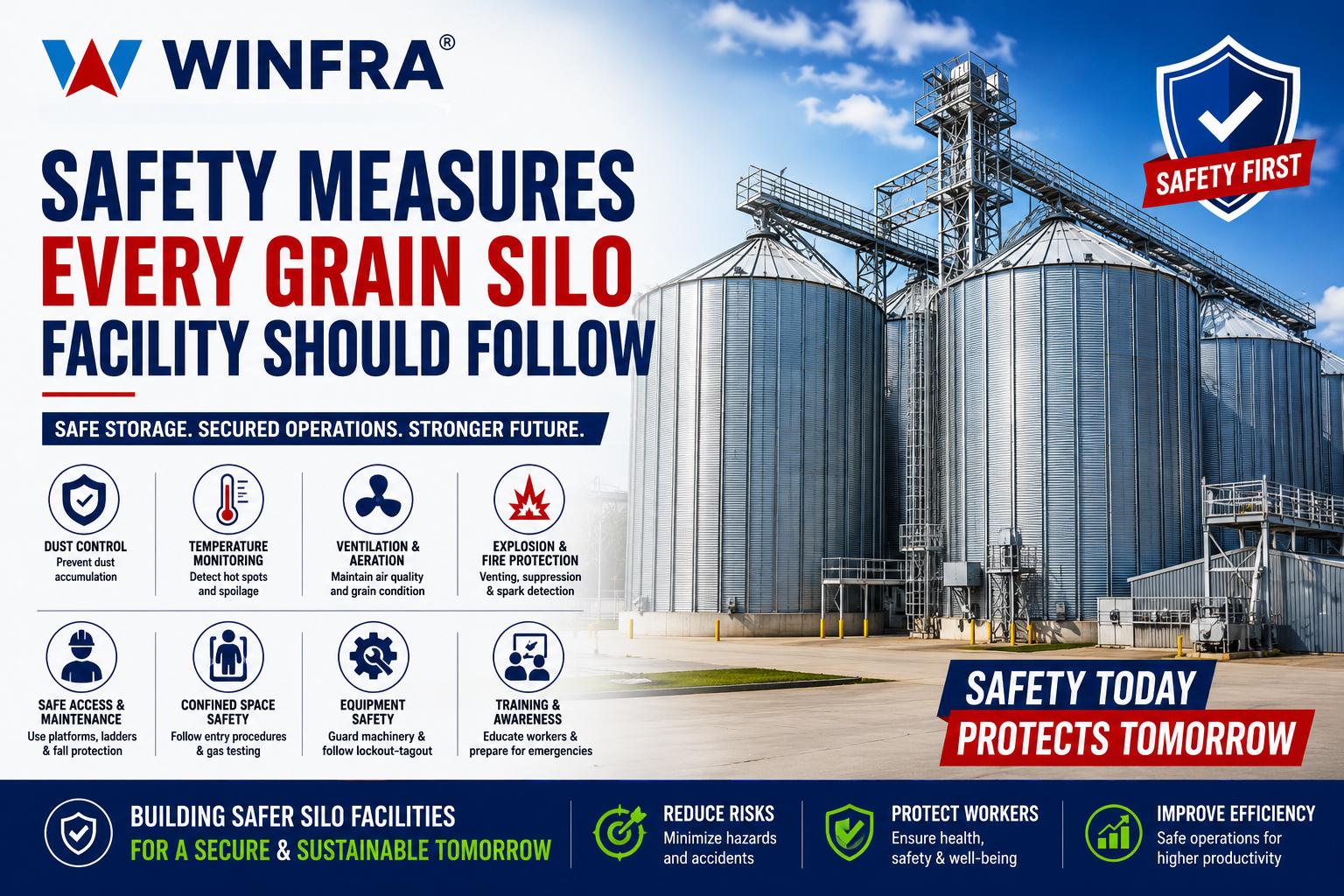
Modern grain silo facilities play a critical role in agriculture, food processing, and bulk material handling industries. From wheat and rice storage to maize and feed management, grain silos help industries improve storage efficiency, reduce losses, and support automated operations.
However, grain storage facilities also involve several operational and safety risks if proper systems and procedures are not followed. Dust explosions, structural failures, grain spoilage, equipment accidents, and confined space hazards are some of the major concerns in bulk grain handling operations.
This is why implementing proper grain silo safety measures is essential for protecting workers, maintaining grain quality, and ensuring uninterrupted operations.
At Winfra, we design advanced grain silo systems engineered with safety, durability, and operational reliability for modern agricultural and industrial storage applications.
Why Grain Silo Safety Is Important
A grain silo facility operates with:
- Bulk grain storage
- Mechanical conveying systems
- Aeration equipment
- Electrical systems
- Confined storage environments
Without proper safety practices, facilities may face:
- Grain dust explosions
- Fire hazards
- Structural damage
- Worker injury risks
- Grain contamination
- Equipment failure
Modern silo facilities must follow international safety practices to minimize operational risks and maintain long-term performance.
Common Risks in Grain Silo Facilities
1. Grain Dust Explosion
Fine grain dust particles suspended in air can become highly explosive under certain conditions. A small ignition source can trigger a serious explosion inside enclosed storage or conveying systems.
2. Confined Space Hazards
Inside silo structures, workers may face:
- Oxygen deficiency
- Toxic gas exposure
- Entrapment risks
Proper confined space protocols are critical during maintenance and inspection activities.
3. Grain Bridging and Collapse
Stored grain can sometimes form bridges or unstable walls inside the silo. Sudden collapse may trap workers or damage equipment.
4. Equipment Accidents
Mechanical systems such as:
- Conveyors
- Bucket elevators
- Augers
- Discharge systems
can cause injuries if not properly guarded and maintained.
Essential Safety Measures Every Grain Silo Facility Should Follow
1. Proper Ventilation and Aeration Systems
Efficient aeration systems help control:
- Grain temperature
- Moisture levels
- Dust accumulation
- Fungal growth
Proper airflow reduces spoilage risks and minimizes hazardous gas buildup.
Modern Winfra Grain Silos are designed with integrated aeration and ventilation systems for safer and more efficient grain storage.
2. Dust Control Systems
Dust management is one of the most important safety requirements in grain handling facilities.
Facilities should install:
- Dust collectors
- Air filtration systems
- Dust suppression systems
- Proper housekeeping procedures
Reducing dust accumulation significantly lowers explosion risk.
3. Temperature Monitoring Systems
Temperature monitoring helps identify:
- Hot spots
- Moisture migration
- Grain spoilage
- Internal fermentation
Automated monitoring systems improve grain quality management and prevent fire hazards.
4. Explosion Venting and Fire Protection
Modern grain silo facilities should include:
- Explosion vents
- Fire suppression systems
- Spark detection systems
- Emergency shutdown systems
These systems help control accidents and minimize damage during emergencies.
5. Safe Access and Maintenance Platforms
Silo facilities should provide:
- Safety ladders
- Guard rails
- Maintenance platforms
- Fall protection systems
Proper access systems reduce accident risks during inspection and maintenance activities.
Winfra Grain Silo Systems are engineered with maintenance-friendly access structures designed for operational safety.
6. Confined Space Entry Procedures
Before entering a silo, facilities should ensure:
- Gas testing
- Ventilation
- Safety harness usage
- Lockout-tagout procedures
- Emergency rescue planning
No worker should enter confined silo spaces without proper authorization and safety equipment.
7. Regular Structural Inspection
Routine inspection helps identify:
- Corrosion
- Bolt loosening
- Structural stress
- Roof damage
- Foundation settlement
Preventive maintenance improves long-term structural reliability and operational safety.
8. Employee Safety Training
Every grain handling facility should provide training on:
- Emergency response
- Fire safety
- Confined space procedures
- Equipment operation
- Hazard identification
Well-trained workers significantly reduce operational accidents.
Basic Grain Silo Safety Diagram

Why Modern Grain Silos Require Advanced Engineering
Today’s grain storage facilities are becoming more automated and higher in capacity. This requires advanced engineering for:
- Structural safety
- Dust management
- Corrosion resistance
- Efficient grain handling
- Long-term durability
At Winfra, our grain silo systems are designed for:
- Safe bulk grain storage
- Automated material handling
- Long service life
- Corrosion-resistant performance
- Low maintenance operation
We support agricultural and industrial clients with storage infrastructure designed according to modern operational requirements.