
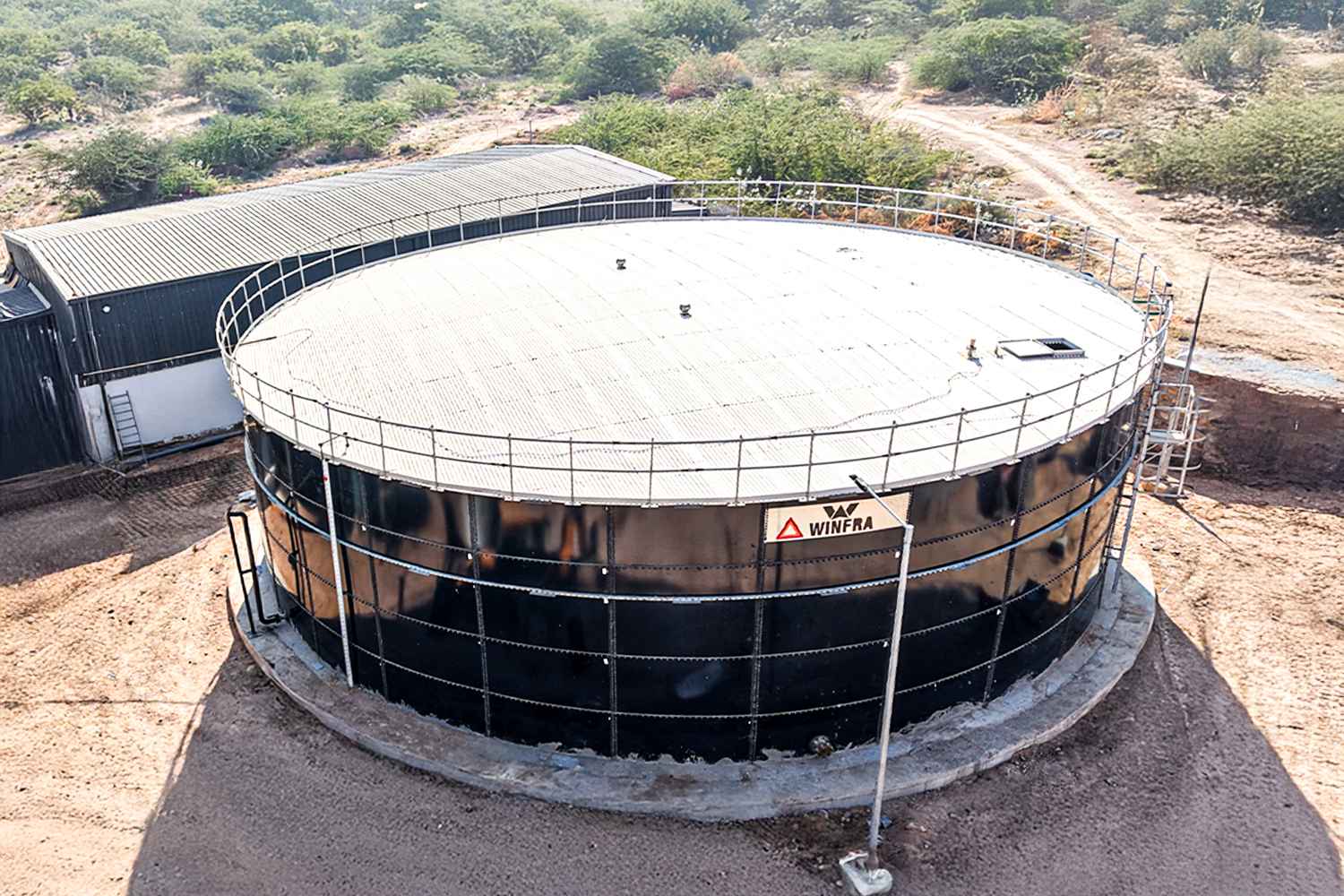
Efficient bulk storage is one of the most important factors in modern agriculture, food processing, feed manufacturing, and industrial supply chains. The right storage infrastructure not only protects materials but also improves operational efficiency, reduces losses, and supports long-term business growth.
Among the most commonly used storage systems, warehouses and grain silos remain the top choices for bulk material storage. However, both systems differ significantly in terms of design, automation, storage efficiency, and long-term performance.
At Winfra, we provide advanced grain silo solutions engineered for modern bulk storage applications across agriculture and industrial sectors.
What Is a Warehouse?
A warehouse is a large enclosed storage facility designed to store various types of materials, including:
- Bagged grains
- Packaged food products
- Raw materials
- Industrial goods
- Agricultural commodities
Warehouses are widely used because of their flexibility and multi-purpose storage capability.
Advantages of Warehouses
Flexible Storage Solution
Warehouses can store multiple product categories simultaneously, making them suitable for mixed inventory operations.
Easy Accessibility
Workers, forklifts, and material handling equipment can move easily inside the facility.
Lower Initial Investment
Compared to engineered silo systems, warehouses may require lower initial construction costs in some projects.
Suitable for Short-Term Storage
Warehouses are commonly used for temporary storage and distribution operations.
Limitations of Warehouses
Despite their flexibility, warehouses have several limitations for bulk storage applications:
- Higher land requirement
- Lower storage efficiency
- Greater dependency on manual handling
- Higher exposure to moisture and pest infestation
- Increased chances of product contamination
For large-scale grain handling, these factors can increase operational losses over time.
What Is a Grain Silo?
A grain silo is a specially engineered vertical storage system designed for storing loose bulk materials such as:
- Wheat
- Rice
- Maize
- Corn
- Feed
- Seeds
- Agricultural commodities
Modern Winfra Grain Silos are manufactured using galvanized steel or Zincalume steel and are integrated with advanced grain management systems.
These silo systems typically include:
- Aeration systems
- Temperature monitoring
- Mechanical conveyors
- Loading and unloading systems
- Maintenance platforms and ladders
Grain silos are specifically designed for long-term bulk storage with controlled storage conditions.
Warehouse vs Grain Silo: Technical Comparison
1. Storage Efficiency
Warehouse
Warehouses use horizontal storage methods, requiring larger land areas for high-capacity storage.
Grain Silo
Grain silos use vertical storage technology, maximizing storage capacity within minimal land space.
This makes Winfra Grain Silos highly suitable for large industrial and agricultural storage projects.
2. Material Handling System
Warehouse
Warehouses often depend on:
- Manual labor
- Forklifts
- Semi-mechanized handling
This increases handling time and manpower dependency.
Grain Silo
Modern silo systems support fully mechanized operations through:
- Bucket elevators
- Chain conveyors
- Screw conveyors
- Automated discharge systems
This improves operational speed and reduces handling losses.
3. Grain Protection and Preservation
Warehouse
Warehouses are more vulnerable to:
- Moisture ingress
- Pest attacks
- Rodent infestation
- Fungus formation
- Uneven ventilation
Grain Silo
Modern silo systems maintain controlled storage conditions through:
- Aeration systems
- Temperature control
- Moisture management
- Sealed bulk storage
This helps preserve grain quality for longer durations with minimal losses.
4. Automation Capability
Warehouse
Automation levels are generally limited in conventional warehouse systems.
Grain Silo
Winfra Grain Silo Systems are designed for high automation and integration with modern grain handling infrastructure.
Automation improves:
- Inventory management
- Loading efficiency
- Operational productivity
- Labor optimization
5. Long-Term Operational Cost
Warehouse
Although warehouses may have lower initial construction costs, long-term expenses can increase due to:
- Labor costs
- Pest control
- Product damage
- Lower storage efficiency
Grain Silo
Modern silos offer:
- Lower operational losses
- Better storage efficiency
- Reduced maintenance
- Longer service life
This results in better lifecycle cost performance.
Which Is Better for Bulk Storage?
The ideal storage solution depends on the type of material, project scale, and operational requirements.
Warehouses Are Suitable For:
- Multi-product storage
- Temporary storage
- Bagged commodity handling
- Flexible logistics operations
Grain Silos Are Better For:
- Bulk grain storage
- Long-term preservation
- Automated grain handling
- Large-capacity operations
- Space-efficient storage
For modern agricultural and industrial bulk storage applications, grain silos provide significantly better operational efficiency and long-term value.
Why Industries Prefer Winfra Grain Silos
At Winfra, we manufacture advanced grain silo systems designed for:
- Bulk grain storage
- Faster installation
- Corrosion resistance
- Automated handling systems
- Long operational life
- Low maintenance performance
Our silo solutions are widely used in:
- Rice mills
- Feed plants
- Flour mills
- Ethanol industries
- Food processing units
- Agricultural infrastructure projects